
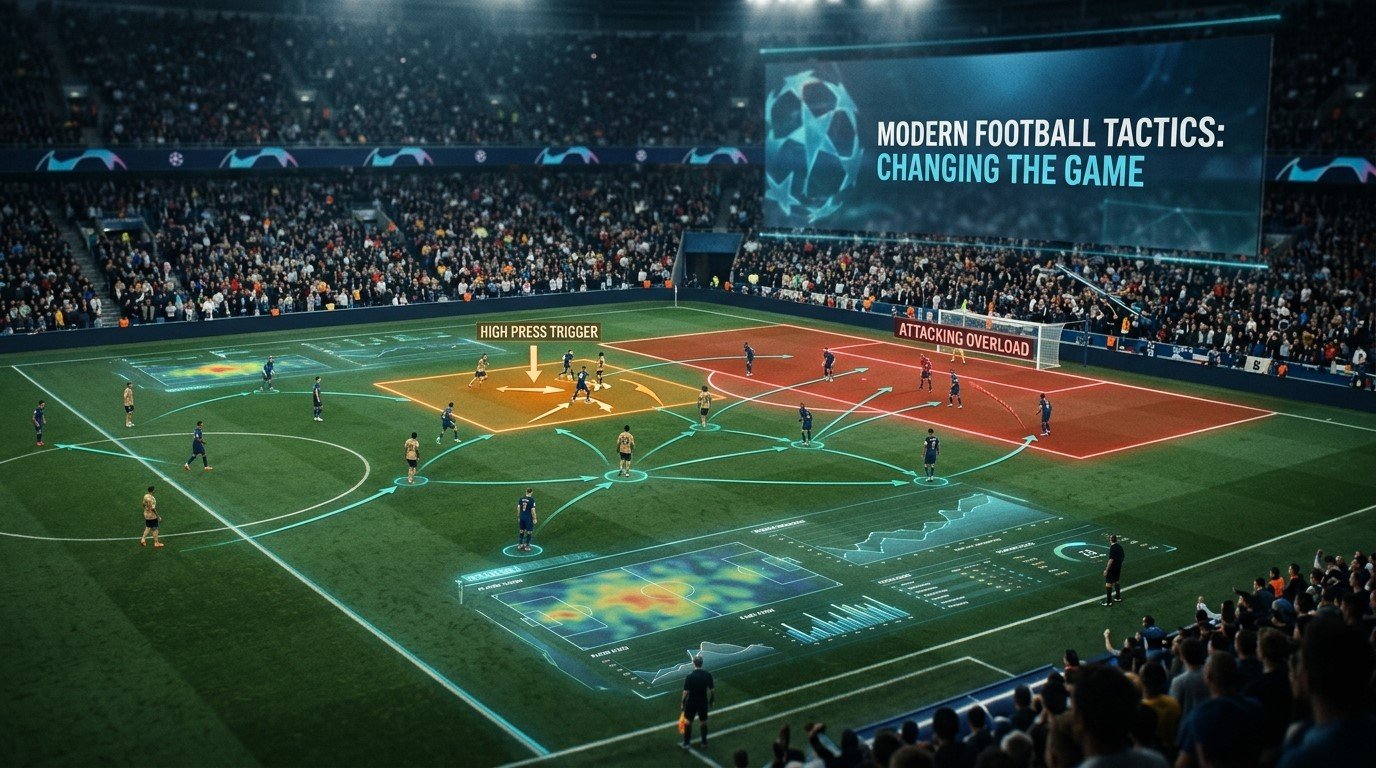
How Modern Football Tactics Are Changing the Game
Football has always been a game of strategy, but the tactical side of the sport has changed dramatically. The days when a team could simply choose a formation before kickoff and maintain it for 90 minutes are increasingly becoming a thing of the past.
Modern football is built around tactical flexibility. Teams may begin a match in a familiar 4-3-3 or 4-2-3-1 but transform their shape when they have possession, change their pressing structure after losing the ball, or introduce a completely different system through substitutions.
This evolution has made football more dynamic for players, managers and supporters alike. Formations are no longer simply numbers written on a team sheet—they are starting points for constantly changing systems.
The Shift from Fixed Formations to Fluid Systems
Traditional football formations such as 4-4-2, 4-3-3 and 3-5-2 provided a clear structure. Players generally had defined positions and responsibilities, with relatively predictable movements.
Modern football is much more fluid.
A team listed as a 4-3-3 on the team sheet might defend in a 4-4-2, build from the back in a 3-2-5 and press the opposition using an entirely different shape.
This is one of the most important developments in modern football tactics.
Why Do Teams Change Formation During a Match?
There are several reasons.
- Create numerical advantages in midfield
- Exploit space behind opposition fullbacks
- Improve build-up play
- Stop an opponent’s strongest attacking route
- Increase pressing intensity
- Protect a lead
- Chase an equalizer
- Give greater freedom to creative players
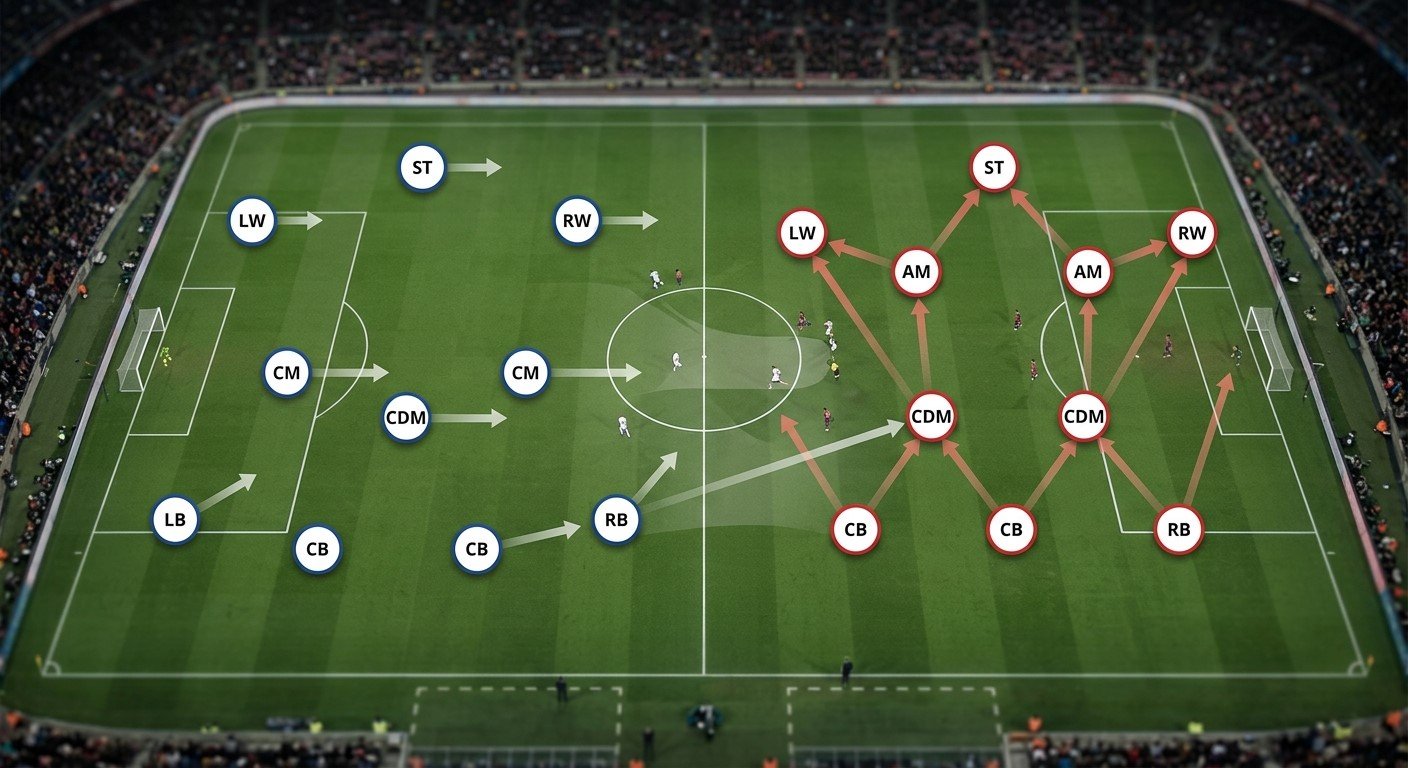
For example, a fullback may move into midfield when his team has possession. This can create a three-player defensive base behind two midfielders, while five attacking players occupy the opposition’s defensive line.
The result can resemble a 3-2-5 rather than the team’s original 4-3-3.
The important point is that the formation has not necessarily been “changed” in the traditional sense. Instead, the players are performing different roles depending on the phase of play.
From 4-3-3 to 3-2-5
Consider a simplified example.
A team starts with:
4-3-3
During possession, one fullback moves into midfield while the other remains deeper. One central defender may also move wider to provide an outlet.
The team can then resemble:
3-2-5
This gives the team more players in advanced positions while maintaining enough defensive cover to deal with counterattacks.
This type of positional flexibility has become increasingly common at the highest level of the game.
What Makes Tactical Flexibility So Important?
Tactical flexibility gives managers more ways to solve problems during a match.
Imagine a team struggling to progress the ball because the opponent has crowded the centre of the pitch. Rather than simply telling players to pass faster, the manager may change the team’s structure.
A midfielder might drop deeper. A fullback could move inside. A winger could move closer to the touchline to stretch the defence.
Suddenly, passing lanes that were previously blocked can become available.
The same principle works defensively.
If an opponent is repeatedly attacking down one side, a team can alter its pressing structure or shift additional players toward that area.
This means tactical flexibility is not simply about changing formations. It is about changing the way space is used.
How Managers Use Tactical Flexibility
Some of the world’s most successful managers have demonstrated how different tactical structures can be used to control matches.
Pep Guardiola has become particularly associated with positional play, where players occupy carefully chosen spaces to create passing options and numerical advantages.
Jürgen Klopp built much of his Liverpool approach around aggressive pressing, rapid transitions and coordinated movement after losing possession.
Carlo Ancelotti has often demonstrated a different kind of flexibility, allowing experienced players considerable freedom while adjusting midfield structures according to the opponent and match situation.
The approaches are different, but they share an important principle: the formation is a tool, not a limitation.
The Growing Role of Data and Analytics
Tactical evolution has not happened through coaching alone. The growth of football analytics has given managers and analysts access to enormous amounts of information.
Modern clubs can examine metrics including:
- Expected goals (xG)
- Expected assists (xA)
- Shot locations
- Possession zones
- Passing networks
- Progressive passes
- Defensive actions
- Pressing intensity
- Player positioning
- Distance covered
- Transition patterns
One of the best-known metrics is expected goals, or xG.
Rather than simply counting shots, xG attempts to estimate the probability that a particular chance will result in a goal based on factors such as location and type of opportunity.
This can help analysts identify patterns that traditional statistics might miss.
For example, a team may have more possession than its opponent but generate very few high-quality chances. An analytics department can use that information to identify where the attacking structure is failing.
Analytics During the Match
Data is increasingly useful before and after matches, but modern coaching teams can also receive information during games.
Analysts can identify patterns such as:
- An opponent leaving space behind a fullback
- A midfielder receiving the ball too frequently between defensive lines
- A pressing trigger that is failing
- A particular player becoming isolated
- A team’s defensive shape breaking down during transitions
The manager can then respond through instructions, substitutions or changes in structure.
Football is therefore becoming a combination of traditional coaching intuition and increasingly sophisticated data analysis.

Tactical Evolution Across Europe and Beyond
European football remains one of the major centres of tactical innovation, with different leagues developing distinctive approaches.
Premier League
The English Premier League is known for its intensity, physical demands and increasingly sophisticated tactical systems.
Teams regularly combine high pressing, possession-based football, positional rotations and rapid transitions.
The speed of the competition also means managers often need multiple tactical solutions within the same match.
La Liga
Spanish football has historically placed a strong emphasis on technical ability and possession.
Modern Spanish sides continue to experiment with positional rotations, midfield overloads and different approaches to controlling space.
Serie A
Italian football has a long association with defensive organisation and tactical discipline.
Modern Serie A, however, has moved well beyond the stereotype of purely defensive football. Managers increasingly combine structured defending with aggressive pressing, possession and flexible formations.
Bundesliga
The Bundesliga has developed a reputation for high-intensity pressing and rapid transitions.
Teams frequently attempt to win the ball back quickly and attack before the opposition can reorganise.
Beyond Europe
These tactical ideas are also spreading beyond Europe’s traditional football centres.
MLS and the Saudi Pro League, among other competitions, have attracted international managers and players, creating additional opportunities for tactical ideas to move between football cultures.
Asian football is also developing rapidly. Japan and South Korea, in particular, have invested heavily in technical development and tactical education.
The global exchange of coaches, players, analysts and ideas means tactical innovation is no longer restricted to one region.
Why Pressing Has Become So Important
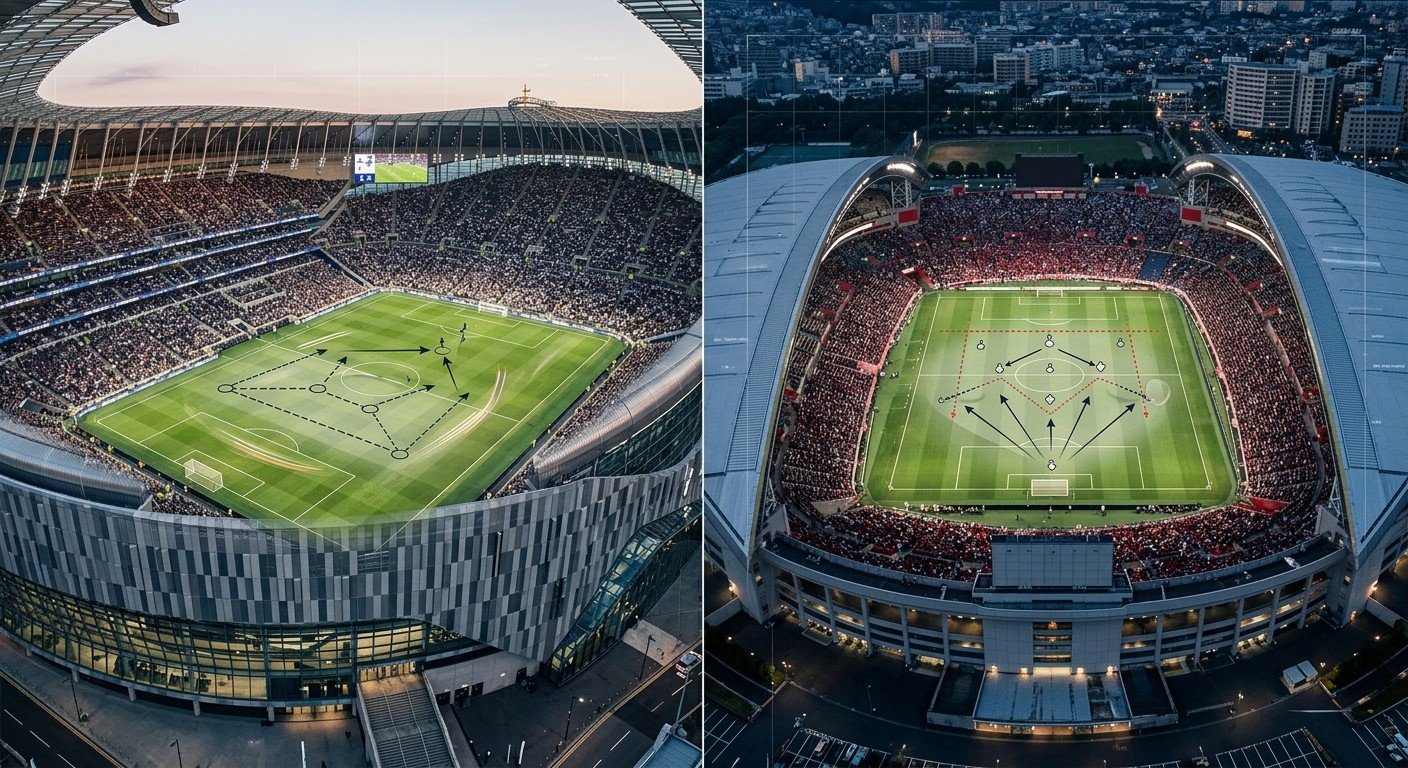
One of the clearest examples of tactical evolution is the development of modern pressing.
Instead of allowing an opponent to build attacks comfortably, teams attempt to force mistakes by applying coordinated pressure.
But pressing is not simply about running toward the ball.
Successful pressing requires players to understand:
- When to press
- Who should initiate the press
- Which passing lanes to block
- Where teammates should position themselves
- When to stop pressing and recover their shape
This is why modern pressing systems require significant tactical coordination.
A poorly organised press can actually make a team vulnerable. If one player moves forward without support, the opponent may simply pass through the space that has been created.
The best pressing teams therefore treat pressure as a collective movement rather than a series of individual sprints.
Tactical Flexibility Is Also Changing the Role of Players
Modern tactics are demanding more versatility from footballers.
A fullback may need to defend like a traditional defender, move into midfield during possession and provide width when the team attacks.
A central midfielder may be expected to contribute to pressing, build-up play and attacking combinations.
Wingers may move inside to create space for overlapping fullbacks, while forwards are increasingly expected to participate in defensive pressing.
This means the modern footballer needs more than technical ability.
Tactical intelligence has become one of the most valuable qualities a player can possess.
Players who understand space, timing and positioning can often adapt to several tactical systems.
Fans Are Learning to Watch Football Differently
Tactical flexibility is also changing the way supporters watch matches.
A goal is still the most obvious moment of excitement, but many fans now pay attention to what happens before the final pass or shot.
Why did the winger move inside?
Why did the fullback suddenly move into midfield?
Why did the opposition stop pressing?
Why did the manager replace a midfielder with another attacker?
These questions have created a growing culture of tactical discussion.
Football podcasts, social media analysis, tactical videos and specialist websites have made concepts that were once largely confined to coaches and analysts accessible to ordinary supporters.
For many fans, understanding the tactical battle has become almost as interesting as the final score.
What Could Football Tactics Look Like in the Future?
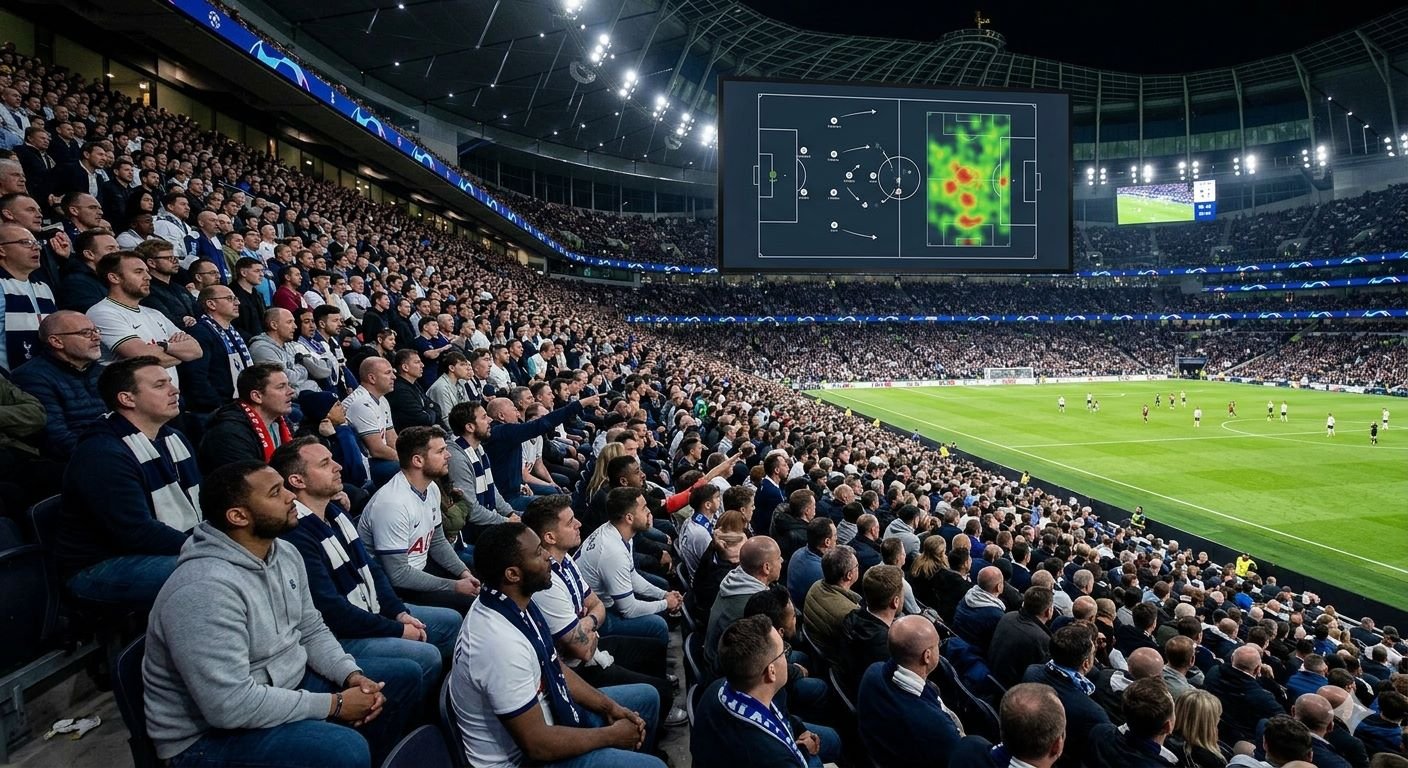
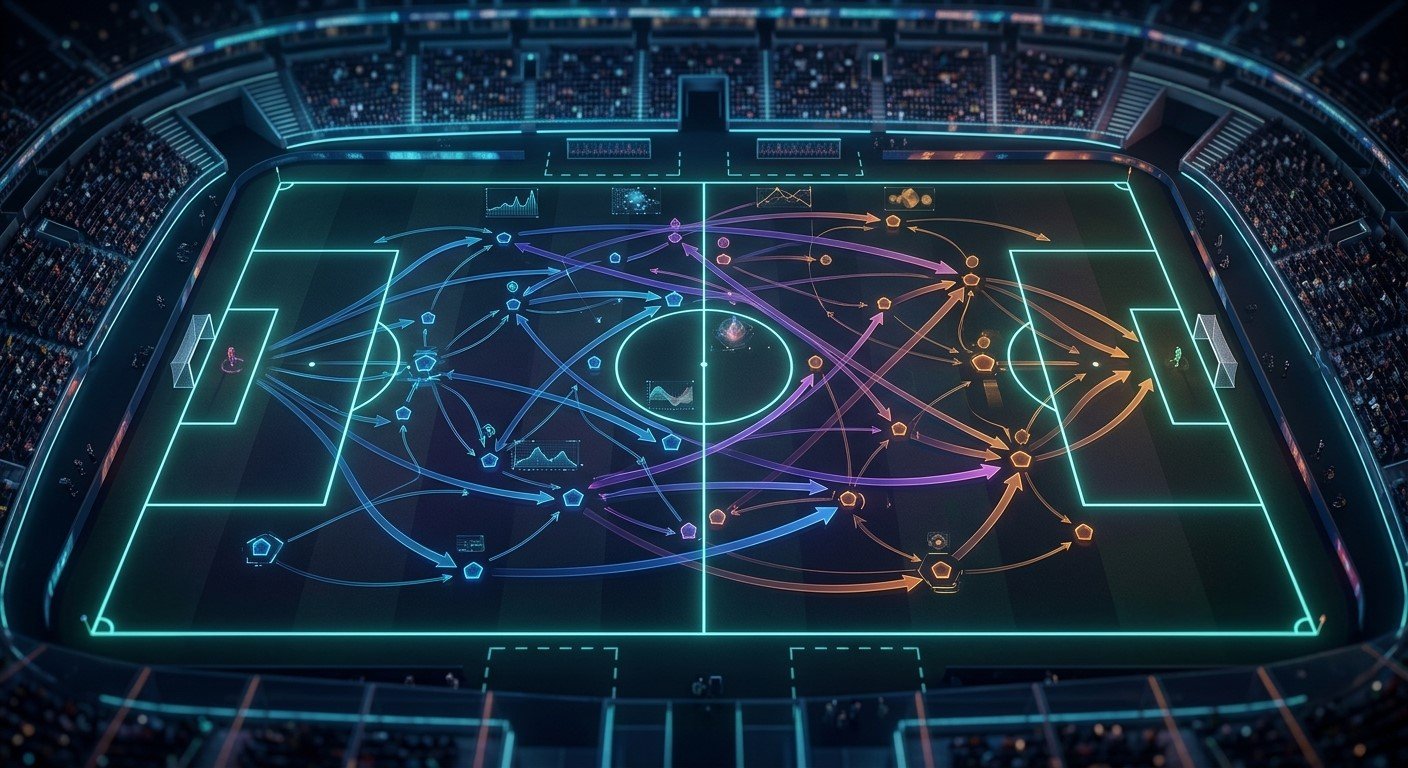
The next stage of tactical evolution is likely to involve even greater integration between coaching, analytics and technology.
Artificial intelligence and advanced performance-analysis systems may help coaching teams identify patterns that are difficult to detect manually.
Wearable technology can provide information about player workloads and physical performance, while increasingly detailed tracking systems can map player movements throughout a match.
However, technology is unlikely to eliminate the human element of coaching.
Football remains unpredictable.
A tactical plan can be perfect on paper and fail because of an individual mistake, an unexpected injury, a moment of brilliance or a change in momentum.
The best managers will therefore continue to combine data with experience, observation and the ability to make decisions under pressure.
Conclusion
Modern football tactics are no longer defined by a single formation.
The most successful teams increasingly rely on fluid structures that change according to possession, opposition pressure, available space and the circumstances of the match.
From 4-3-3 systems transforming into 3-2-5 attacking shapes to increasingly sophisticated pressing structures, football has become a game of constant adaptation.
Data analytics is adding another layer to the process, giving coaches deeper insight into performance and tactical patterns. At the same time, players are being asked to become more versatile and tactically intelligent.
For supporters, this evolution offers another reason to look beyond the scoreboard.
The next time a team appears to change formation during a match, it may not simply be switching from one system to another. It may be responding to space, pressure and opportunity in real time.
And that may be the most important development in modern football: the formation is no longer the strategy—the ability to adapt is.
Frequently Asked Questions
What is tactical flexibility in football?
Tactical flexibility is the ability of a football team to change its structure, player roles or approach according to the situation in a match. A team may use different shapes when attacking, defending and pressing.
What is a 3-2-5 formation in football?
A 3-2-5 is an attacking structure commonly used during possession. Three players provide a defensive base, two players operate ahead of them, and five players occupy advanced positions across the pitch.
Why are football formations becoming more fluid?
Modern teams face increasingly sophisticated opponents. Fluid formations allow managers to create numerical advantages, exploit spaces and respond to changes during matches.
How does xG influence football tactics?
Expected goals (xG) helps teams evaluate the quality of scoring opportunities. Coaches and analysts can use this information alongside other data to identify attacking and defensive strengths and weaknesses.
Why is pressing important in modern football?
Pressing allows teams to try to regain possession quickly and disrupt an opponent’s build-up. Effective pressing depends on coordinated movement, positioning and timing rather than simply running toward the ball.